The Experience of Orthodox Worship: A Sensory Journey through Liturgy, Chanting, and Incense
The Experience of Orthodox Worship: A Sensory Journey through Liturgy, Chanting, and Incense
Entering an Orthodox church can be a transformative experience, transporting worshipers to a world of spiritual beauty and mysticism. The rich sensory landscape of Orthodox worship, with its intricate rituals, haunting chants, and pungent aromas, envelops the faithful in a multisensory journey that awakens the soul. At the heart of this experience lies the Divine Liturgy, a majestic celebration of faith, community, and the presence of the divine.
The Visual Grandeur of the Iconostasis
As one enters the church, the eye is drawn to the magnificent iconostasis, a towering screen adorned with vibrant icons of Christ, the Virgin Mary, and the saints. These masterpieces of Byzantine art, often rendered in gold and precious gems, seem to shimmer in the soft light of the church, creating a sense of reverence and awe. The icons, more than mere decorations, serve as windows to the heavenly realm, connecting the worshiper to theCommunion of Saints and the divine presence.
The Sonic Tapestry of Chanting and Hymns
The air is filled with the sublime sounds of chanting and hymns, a soundscape that transports the worshiper to a realm of spiritual contemplation. The chanting, often performed by trained cantors or choirs, weaves a rich tapestry of melody and harmony, drawing the faithful into the mystical world of prayer. The hymns, many of which date back to the early Christian centuries, speak of the triumph of Christ, the wonder of creation, and the longing for divine union. As the worshiper joins in the singing, they become part of a communal expression of devotion, their voices blending with those of the saints and angels in a celestial chorus.
The Fragrant Cloud of Incense
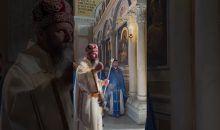
As the liturgy unfolds, the air is filled with the sweet, heady aroma of incense, a symbol of prayer and sacrifice. The smoke, wafting upwards like a fragrant cloud, carries the prayers of the faithful to the throne of God, reminding them of the sacred and the transcendent. The scent of incense, often frankincense or myrrh, evokes the ancient rituals of the Temple in Jerusalem, linking the Orthodox Christian to a tradition of worship that spans millennia.
The Tactile Experience of Veneration
Throughout the liturgy, the worshiper is invited to participate in a range of tactile experiences, from kissing the icons to receiving the Eucharist. The icons, often adorned with precious materials, are venerated with reverence, the worshiper’s lips touching the holy images in a gesture of devotion. The Eucharist, the sacred bread and wine, is received with great solemnity, the worshiper’s hands and mouth becoming vessels for the divine presence. This physical contact with the sacred serves as a powerful reminder of the incarnational nature of Orthodox Christianity, where the spiritual and material worlds intersect.
A Synesthesia of the Senses
The experience of Orthodox worship is a synesthesia of the senses, a fusion of sight, sound, smell, touch, and taste that transcends the individual senses. As the worshiper participates in the liturgy, they become immersed in a world of beauty, a world that speaks to the deepest longings of the human heart. The experience is at once personal and communal, individual and universal, as the worshiper joins with the saints and angels in a cosmic celebration of faith and devotion.
Conclusion
The experience of Orthodox worship is a journey through the senses, a pilgrimage of the soul that awakens the heart, mind, and spirit. Through the majestic iconostasis, the sublime chanting, and the fragrant incense, the worshiper is transported to a realm of spiritual beauty and wonder. As they participate in the liturgy, they become part of a timeless tradition of faith, a tradition that speaks to the deepest aspirations of humanity. In the Orthodox Church, the worshiper discovers a world of transcendence, a world that invites them to participate in the divine life, and to experience the beauty, mystery, and joy of the Orthodox Christian faith.