Celebrating the Nativity: Orthodox Christians Mark Christmas on January 7th
While many Christians around the world celebrated Christmas on December 25th, Orthodox Christians mark the birth of Jesus Christ on January 7th. This difference in dates is due to the use of the Julian calendar, which was introduced by Julius Caesar in 45 BCE, rather than the Gregorian calendar, which is widely used today.
The Julian Calendar and the Date of Christmas
The Julian calendar was the standard calendar used by the Roman Empire and the early Christian Church. However, it had a small error in its calculation of the solar year, which added up to about 11 minutes per year. This may seem like a small amount, but over centuries, it added up, and by the 16th century, the calendar had drifted by about 10 days from the actual solar year.
In 1582, Pope Gregory XIII introduced the Gregorian calendar, which refined the calculation of the solar year and dropped 10 days from the month of October in that year. The new calendar also introduced a new rule for leap years, which eliminated three leap years every 400 years. The Gregorian calendar is the standard calendar used by most of the world today.
Orthodox Christians and the Julian Calendar
However, many Orthodox Christian churches, including the Russian, Greek, and Ukrainian Orthodox churches, continued to use the Julian calendar. As a result, their Christmas celebrations, which are based on the date of the winter solstice and the ancient Jewish festival of Hanukkah, fall on January 7th.
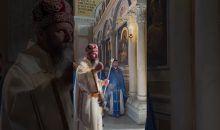
For Orthodox Christians, the celebration of Christmas, also known as the Nativity, is a major feast day that marks the birth of Jesus Christ. The celebration begins on Christmas Eve, with a special liturgy and the blessing of water, and continues on Christmas Day with a festive meal and the exchange of gifts.
Traditions and Customs
Orthodox Christians have many unique traditions and customs surrounding the celebration of Christmas. In many countries, including Russia and Ukraine, it is traditional to fast for 40 days before Christmas, and then to break the fast with a special meal on Christmas Eve. The meal typically includes 12 courses, representing the 12 apostles, and features traditional dishes such as borscht, dumplings, and fruit.
In addition to the festive meal, many Orthodox Christians also participate in special liturgies and services on Christmas Eve and Christmas Day. These services often include the singing of traditional hymns and carols, and the reading of scripture and prayers.
Conclusion
Celebrating Christmas on January 7th is an important part of the Orthodox Christian tradition. The use of the Julian calendar may seem like a minor difference, but it reflects the rich history and cultural heritage of the Orthodox Christian community. Whether celebrated on December 25th or January 7th, the birth of Jesus Christ is a joyous occasion that brings people together and inspires hope, love, and kindness.