Theosis: The Orthodox Quest for Union with God
The Orthodox Quest for Union with God
In Western Christianity, salvation is often framed in legal or penal terms: humanity broke God’s law, fell under divine judgment, and was ransomed through the substitutionary sacrifice of Christ. But if you step into the candlelit, incense-laden sanctuaries of Eastern Orthodoxy, you encounter a profoundly different vision of the human destiny. Salvation is not simply an acquittal; it is an ontological transformation.
At the heart of Orthodox theology lies the radical, beautiful doctrine of Theosis (often translated as *deification* or *divinization*). It is the understanding that humanity’s ultimate calling is not merely to be pardoned, but to become like God—to partake directly of the divine life.
The Patristic Foundation
While modern ears might hear the idea of “becoming god” as hubris or heresy, the Orthodox Church regards it as the foundational purpose of creation. Rooted in the New Testament, St. Peter writes that believers are called to “become partakers of the divine nature” (2 Peter 1:4).
In the fourth century, Saint Athanasius the Great famously crystallized this mystery in his treatise On the Incarnation:
<blockquote>

  "God became man so that man might become god."

  <cite>— Saint Athanasius of Alexandria</cite>

</blockquote>
<p>

  This bold declaration does not suggest that humans become gods in their own right, displacing the Creator. Rather, it means that through Christ's descent into human nature, human nature was consecrated and granted the capacity to ascend into the divine life. What Christ is by nature, humanity is invited to become by grace.

</p>
Essence vs. Energies: Safeguarding the Distinction
How can a finite, created human unite with an infinite, uncreated God without being annihilated or slipping into pantheism? The fourteenth-century theologian Saint Gregory Palamas defended a critical theological distinction that protects the sanctity of this union: the distinction between God’s Essence (Ousia) and His Energies (Energeia).
- God’s Essence: Completely transcendent, unapproachable, unknowable, and beyond the reach of any created thing. Humans will never know God in His essence.
- God’s Energies: God’s operations, love, grace, and uncreated light entering into the world. Through His energies, God makes Himself truly known and accessible to humanity.
<p>

  To illustrate this, the Church Fathers often used the metaphor of an iron sword thrust into a fire. The sword remains made of iron (it does not transform into fire), yet it absorbs the heat and the light of the fire so completely that it burns and glows like fire. Similarly, a person undergoing theosis remains entirely human by nature, yet becomes thoroughly suffused with the uncreated life and light of God.

</p>
The Three Stages of the Spiritual Journey
Theosis is not an instantaneous event; it is an organic, lifelong ascent. Orthodox ascetical theology outlines this movement through three classic stages:
<div class="stages-container">

  <div class="stage-card">

    <h3>1. Katharsis (Purification)</h3>

    <p>

      The journey begins with repentance (<em>metanoia</em>, literally "a change of mind"). In this stage, the believer wrestles with the passions—pride, greed, lust, and anger—which distort human nature. Through prayer, fasting, confession, and the sacraments, the spiritual cataracts are removed from the soul.

    </p>

  </div>
<div class="stage-card">

    <h3>2. Theoria (Illumination)</h3>

    <p>

      As the heart is cleansed of passions, the inner eye of the soul (the <em>nous</em>) is awakened. In this state of illumination, the Christian begins to perceive spiritual realities clearly. Prayer ceases to be merely a list of requests and becomes an intuitive, unceasing communion with God, often cultivated through the Jesus Prayer: <em>"Lord Jesus Christ, Son of God, have mercy on me, a sinner."</em>

    </p>

  </div>
<div class="stage-card">

    <h3>3. Theosis (Deification / Union)</h3>

    <p>

      The culmination of the journey, where the soul is fully joined with God in love. The believer reflects God's virtues, bears the fruit of the Holy Spirit effortlessly, and may even be enveloped by the uncreated light of Tabor—the same light the Apostles witnessed at Christ's Transfiguration.

    </p>

  </div>

</div>
The Practical Path: Hesychasm and the Sacraments
Theosis is not a theoretical philosophy; it is an embodied practice. It cannot be achieved through intellectual gymnastics or sheer human will. The Orthodox tradition grounds theosis in two essential pillars:
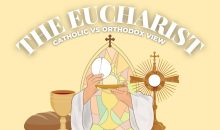
1. The Sacramental Life: Theosis begins at Baptism, is sealed in Chrismation, and is nourished weekly at the Divine Liturgy through the Eucharist. By consuming the literal Body and Blood of Christ, the believer physically and spiritually ingests the divine life.
2. Hesychasm (Inner Stillness): Stemming from the Greek word hesychia, this is the tradition of interior silence. Through rhythmic breathing, vigilance over intrusive thoughts (nepsis), and repetitive contemplation of the Jesus Prayer, the hesychast quietens the noise of the ego to create a resting place for the Holy Spirit.
An Eternal Horizon
Critically, Eastern Orthodoxy teaches that Theosis has no finish line. Because God is infinite, our growth in His love and wisdom cannot end. Even in the age to come, the soul will move eternally from glory to glory (epektasis)—an infinite adventure deeper into the divine beauty.
Ultimately, the quest for Theosis reveals that Christianity is not simply about being “good” or gaining admittance into paradise. It is an invitation to be transfigured. To the Orthodox mind, to be human is to be an icon of God; and to achieve Theosis is to let the Iconographer restore that portrait until it shines with the very radiance of the Divine.