Divided by Doctrine: Understanding the Rift Between Christian and Orthodox Traditions
Divided by Doctrine: Understanding the Rift Between Christian and Orthodox Traditions
The Christian faith has been a cornerstone of Western civilization for centuries, shaping culture, art, and society in profound ways. However, within the Christian tradition, there exists a significant divide between the Eastern Orthodox Church and the Western Christian churches, including Catholic and Protestant denominations. This rift, which has been in place for nearly a thousand years, is rooted in fundamental differences in doctrine, practice, and ecclesiology. In this article, we will explore the historical and theological factors that have contributed to this divide, and examine the implications of this division for the Christian faith as a whole.
The Great Schism of 1054
The Great Schism of 1054 is widely regarded as the pivotal event that marked the beginning of the divide between the Eastern Orthodox Church and the Western Christian churches. The schism was sparked by a dispute over the authority of the Pope, with the Eastern Orthodox Church rejecting the claim of the Western Church that the Pope had supreme authority over all Christians. This disagreement was fueled by a range of factors, including cultural and linguistic differences between the Eastern and Western churches, as well as differing interpretations of key Christian doctrines.
At the heart of the dispute was the question of the filioque clause, a phrase that was added to the Nicene Creed by the Western Church in the 6th century. The clause, which states that the Holy Spirit proceeds from both the Father and the Son, was seen as a challenge to the authority of the Eastern Orthodox Church and its traditional understanding of the Trinity. The Eastern Orthodox Church rejected the filioque clause, arguing that it was an unauthorized addition to the creed and that it undermined the unique role of the Father as the source of the Holy Spirit.
Doctrinal Differences
In addition to the dispute over the filioque clause, there are several other key areas of doctrine that have contributed to the divide between the Eastern Orthodox Church and the Western Christian churches. One of the most significant of these is the concept of original sin, which is understood differently in the Eastern and Western traditions. In the Western Church, original sin is seen as a guilt that is inherited by! all humanity as a result of Adam’s fall, and which can only be redeemed through the sacraments of baptism and penance. In contrast, the Eastern Orthodox Church views original sin as a corruption of human nature, rather than a guilt that is inherited by all.
Another area of doctrine that has contributed to the divide is the understanding of the sacraments, particularly the Eucharist. In the Western Church, the Eucharist is seen as a sacrifice that is offered to God, in which the bread and wine are believed to be transformed into the body and blood of Christ. In the Eastern Orthodox Church, the Eucharist is seen as a mystery that is beyond human comprehension, in which the bread and wine are believed to be transformed into the body and blood of Christ through the power of the Holy Spirit.
Practical Implications
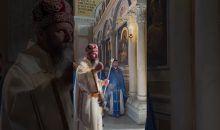
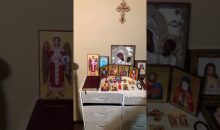
The divide between the Eastern Orthodox Church and the Western Christian churches has had significant practical implications for the Christian faith. One of the most obvious of these is the fact that the two traditions have developed distinct liturgical and sacramental practices, which reflect their different understandings of doctrine and ecclesiology. For example, the Eastern Orthodox Church has a rich tradition of iconography and veneration of saints, which is not found in the Western Church.
Another practical implication of the divide is the fact that the two traditions have different understandings of church government and authority. In the Western Church, the Pope is seen as the supreme authority, with the power to make dogmatic pronouncements and to exercise jurisdiction over all Christians. In the Eastern Orthodox Church, the Ecumenical Patriarch is seen as the spiritual leader of the church, but he does not have the same level of authority as the Pope.
Ecumenical Dialogue
Despite the significant doctrinal and practical differences between the Eastern Orthodox Church and the Western Christian churches, there have been efforts in recent years to promote ecumenical dialogue and understanding. The Joint International Commission for Theological Dialogue between the Orthodox Church and the Roman Catholic Church, which was established in 1979, has been a key forum for this dialogue.
One of the most significant achievements of this dialogue has been the lifting of the mutual excommunications that were imposed in 1054, which marked a significant step towards healing the rift between the two traditions. However, much work remains to be done to address the deeper theological and doctrinal differences that have contributed to the divide.
Conclusion
The divide between the Eastern Orthodox Church and the Western Christian churches is a complex and multifaceted phenomenon that has been shaped by a range of historical, cultural, and theological factors. While there are significant differences in doctrine and practice between the two traditions, there are also many areas of commonality and shared commitment to the Christian faith. As the Christian world continues to evolve and change, it is likely that the dialogue between the Eastern Orthodox Church and the Western Christian churches will play an increasingly important role in shaping the future of the faith. By understanding the roots of the divide and working towards greater mutual understanding and respect, Christians of all traditions can work together to promote a more united and vibrant witness to the Gospel.