A Different Date for Christmas: When Do Orthodox Christians Celebrate the Birth of Jesus?
While the majority of the world celebrates Christmas on December 25th, there is a significant portion of Christians who observe this holiday on a different date. Orthodox Christians, who make up around 200 million people worldwide, celebrate the birth of Jesus Christ on January 7th. But why the difference in dates, and how do Orthodox Christians observe this sacred holiday?
A Brief History of Christmas
The early history of Christmas is not well documented, but it is believed that the holiday has its roots in ancient pagan festivals that celebrated the winter solstice. The winter solstice, which typically falls on December 21 or 22, marks the shortest day of the year and the beginning of the sun’s journey back towards the equator. Many ancient cultures celebrated this time of year with festivals and rituals to mark the return of the sun and the coming of longer days.
Early Christians, however, did not celebrate the birth of Jesus as a separate holiday. Instead, they observed the Epiphany, which commemorated the visit of the Magi to the baby Jesus, on January 6th. It wasn’t until the 4th century that Christmas began to be observed as a separate holiday, and it was initially celebrated on various dates in different parts of the world.
The Difference in Dates
So why do Orthodox Christians celebrate Christmas on January 7th, while the rest of the world observes it on December 25th? The reason lies in a difference in calendars. The Orthodox Church uses the Julian calendar, which was introduced by Julius Caesar in 45 BCE, to calculate the date of Christmas. The Julian calendar is 13 days behind the Gregorian calendar, which is used by most of the world and was introduced in 1582 CE.
In 1582, Pope Gregory XIII introduced the Gregorian calendar, which dropped 10 days from the month of October and introduced a new rule for leap years. The Orthodox Church, however, did not adopt the new calendar, and as a result, the date of Christmas was shifted 13 days forward. Today, Orthodox Christians celebrate Christmas on January 7th, which corresponds to December 25th on the Julian calendar.
Orthodox Christmas Traditions
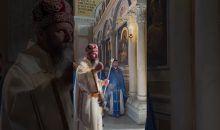
Despite the difference in dates, Orthodox Christmas traditions are similar to those observed by other Christians around the world. Orthodox Christians attend church services, often at midnight, to celebrate the birth of Jesus. They also exchange gifts, spend time with family and friends, and enjoy traditional foods such as baklava and kourabiedes (shortbread-like cookies).
In many Orthodox countries, Christmas is a time for feasting and merriment. In Ethiopia, for example, Christmas is celebrated with a large feast called Ganna, which includes traditional dishes such as injera (sourdough flatbread) and wat (stew). In Russia, Christmas is a time for family gatherings and gift-giving, and is often marked with a traditional meal of borscht (beet soup) and pierogies (dumplings).
Conclusion
While the date of Christmas may differ for Orthodox Christians, the spirit of the holiday remains the same. It is a time for celebration, reflection, and joy, and is observed by millions of people around the world. Whether you celebrate on December 25th or January 7th, the true meaning of Christmas remains the same: to commemorate the birth of Jesus Christ and the values of love, kindness, and compassion that he represents.